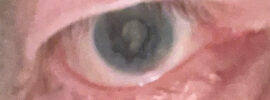
For the last 55 years I’ve worn contact lenses of various sorts. Initially it was “hard” lenses, and since 1985 or so it was soft lenses. I’ve had great results. As I’ve neared my 80th year, my eyes are drier and my lenses are increasingly difficult to remove at the end of the day. It may take as many as 10 attempts to kind of “scrape” each one off my eyeball. Probably not healthy. And as my hands get unsteady with age, I feel I’m increasingly likely to poke myself in the eye when inserting a lens in the morning.
During an eye examination a year or so ago, the doctor mentioned that I am developing cataracts in both eyes. I don’t experience any of the serious typical effects like poor night vision or cloudiness, so it really is not affecting my functioning, but it does mean that I am a legitimate candidate for cataract surgery. This procedure removes the natural lens from the eye and replaces it with a clear artificial lens. It can also correct for near-sightedness, which is why I wore contact lenses in the first place.
So I went onto my doctor’s schedule for cataract surgery, with the target date being April 8. My right eye will be modified on the 8th, and my left eye two weeks later.
The doctor provided several choices in terms of type of implanted lens. (These are generically called Intra Ocular Lens or IOL.) It seemed to me that the most common was to have one eye corrected for a distant version, and the other eye corrected for near vision. The goal there being to get the best possible result for each eye separately by using a monofocal lens in each case. That gives a sharpest correction to vision following surgery.
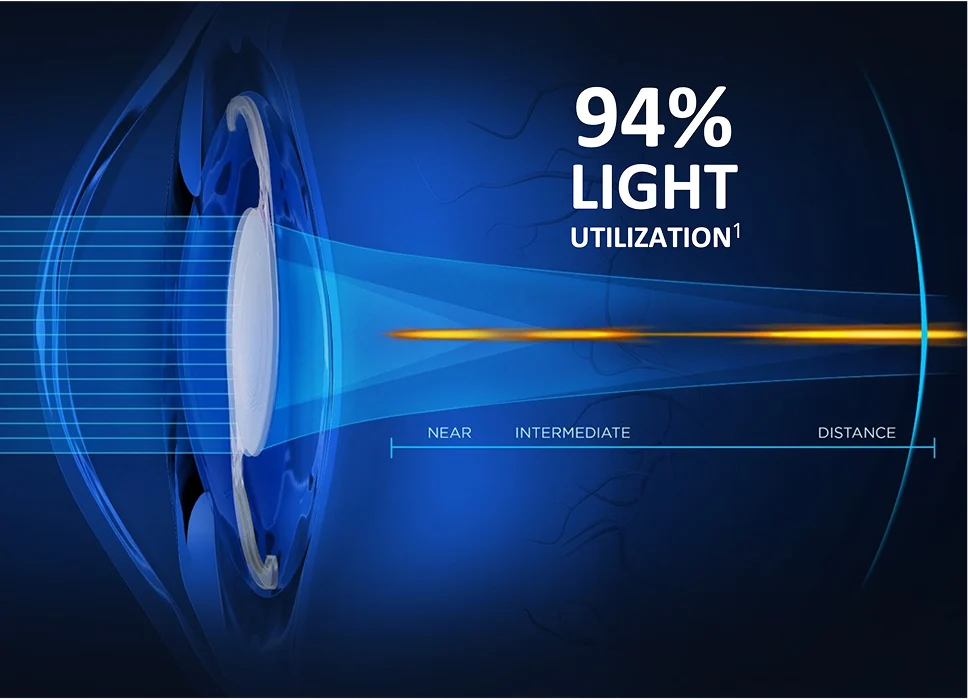 But he also offered me the option of an IOL specially crafted to provide three ranges of correction — near, medium and distant — all in the same lens. The common trifocal glass lens, which many people wear in their spectacles, is another way to address this. But this IOL, unlike spectacles, doesn’t require moving the head or adjusting eye angles to change its focus. Instead, it uses a ring shaped pattern on the IOL that provides all three ranges or focal lengths to the retina at the same time. The brain deciphers the three incoming images and “sees“ only one distance at a time. My understanding is that the brain learns to ignore the two that are irrelevant and pay attention only to the appropriate distance at any one time. Apparently, the brain and the eye work this way all the time, but it seemed a bit like magic to me and I look forward to exploring it and describing the process.,
Thus, this series of posts about my experience with the Panoptix Pro IOL.